
If your boiler has started playing up, you’re probably weighing up whether to fix it again or finally go for a boiler upgrade. It’s one of the most common conversations I have with homeowners and landlords across Guildford and Woking. Nobody wants to spend more than they need to, but nobody wants to keep throwing money at a tired old system either.
The right choice depends on a few key things: age, reliability, efficiency, and what you realistically want from your heating over the next ten to fifteen years. Let’s break it down in plain terms.
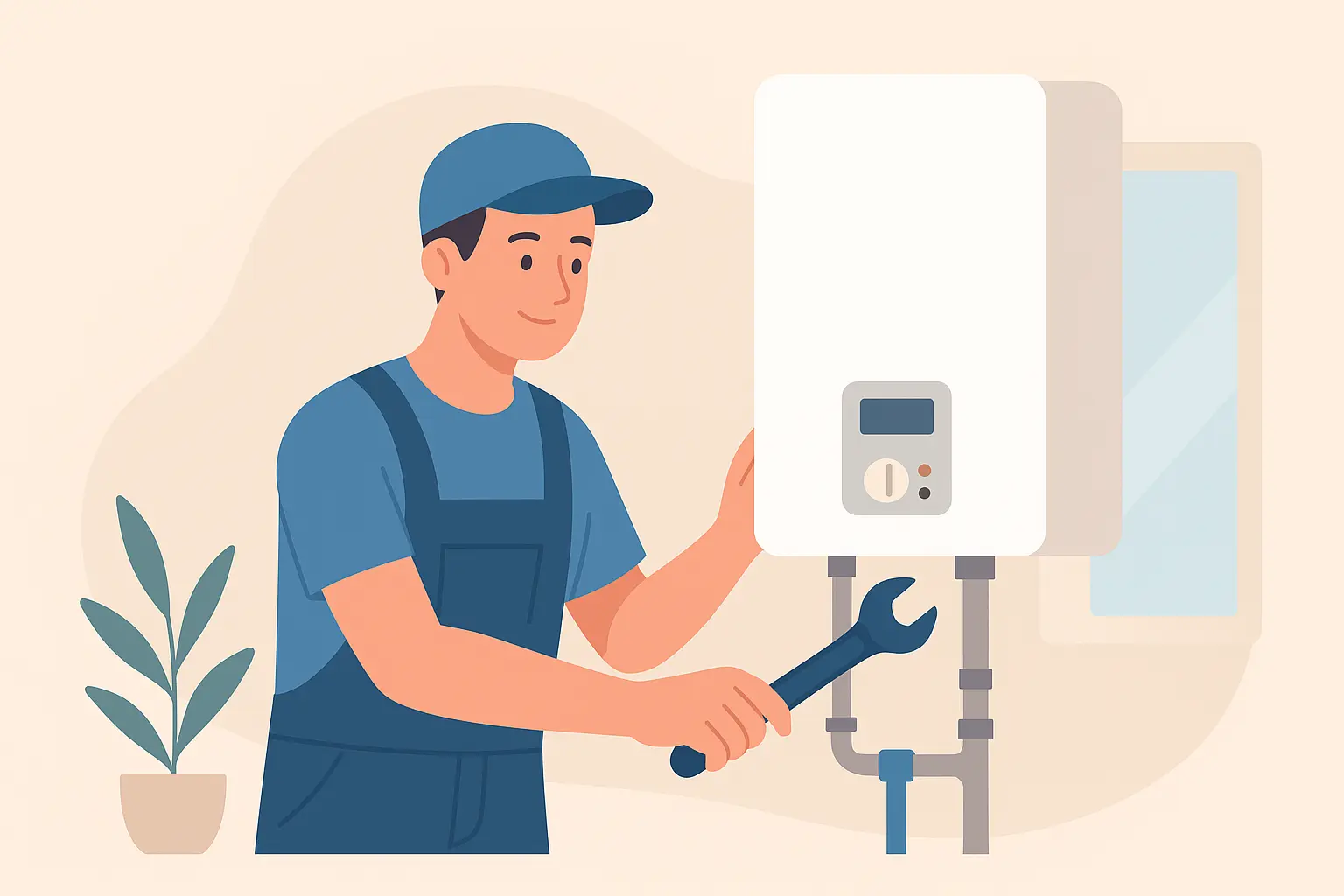
Key signs your boiler needs replacing
There’s no single rule that applies to every home, but over the years certain patterns crop up again and again.
Age of the boiler
Most modern boilers last around 10 to 15 years if they’ve been serviced properly. If yours is older than that, you’re on borrowed time. I still see 18 or 20 year old boilers ticking along in older houses around Guildford, but parts are often obsolete and efficiency is a long way behind current standards.
If you can’t get parts easily, every breakdown becomes more stressful and more expensive to sort.
Frequent breakdowns
One repair every few years is normal. Two or three call-outs in a single winter is a red flag. I’ve had customers in Woking say, “It’s fine most of the year, it just stops when it’s really cold.” That’s usually the system telling you it’s struggling under demand.
If you’re losing confidence in it, that matters. Heating and hot water isn’t a luxury in January.
Rising energy bills
Older non-condensing boilers can be 60 to 70 percent efficient. A modern A-rated condensing boiler is well over 90 percent efficient when set up correctly. That gap shows up on your gas bill.
If your usage seems high compared to similar homes nearby, your boiler could be the culprit.
Noisy operation or poor performance
Banging, kettling or uneven heating across radiators can sometimes be resolved with a proper clean. In some cases a powerflushing service can breathe new life into a struggling system. But if the boiler itself is corroding internally, cleaning the pipework won’t fix that.
If hot water runs out quickly or radiators never quite get hot enough, it’s worth asking whether the boiler is still fit for the property.
When a repair is the better option
Replacement isn’t always the answer. I often advise customers to repair when:
- The boiler is under 8 to 10 years old
- The issue is a single failed component such as a pump or fan
- The boiler has a solid service history
- There haven’t been repeated faults
If a relatively modern boiler has its first major part fail, it usually makes sense to repair it. Especially if the heat exchanger is sound and there are no signs of wider wear.
For landlords, this is often the tipping point. If the appliance is reliable and compliant, keeping it going for a few more years can be sensible.
Cost comparison: short-term fixes vs long-term savings
On paper, a repair is cheaper than a full replacement. That’s obvious. The real question is what happens over the next few years.
I sometimes see homeowners spend money on:
- A new pump one year
- A gas valve the next
- Then a PCB not long after
Individually those repairs seem manageable. Add them together and you start approaching a significant portion of the cost of a new boiler, without gaining any efficiency or warranty benefits.
If you’re planning to stay in the property long term, investing once in a reliable new system can offer better value overall. If you’re likely to move within a year, a safe short-term repair might be enough.
Some homeowners also look at spreading the cost. There are options available, which you can explore here: boiler finance options. It’s not for everyone, but it can make a planned upgrade easier to manage.
Energy efficiency, warranties and modern boiler benefits
Modern boilers aren’t just more efficient. They’re quieter, smarter and more controllable.
You’ll often get:
- Longer manufacturer warranties when installed to specification
- Better compatibility with smart thermostats
- Improved modulation for steadier room temperatures
- Lower carbon emissions
In practical terms, that means fewer cold spots and less on-off cycling. In smaller terraces around Woking, that can make the whole house feel more comfortable rather than just blasting heat in short bursts.
In larger detached homes in Guildford, correct sizing and modern controls can make a noticeable difference to running costs over time.
And the warranty is worth thinking about. A new boiler with a solid guarantee gives peace of mind. With older models, you’re always one breakdown away from another decision.
How to decide: professional assessment and next steps
When I’m asked whether to repair or replace, I look at three things straight away:
- Overall condition of the boiler and system
- Breakdown history
- Your plans for the property
Be honest with yourself. Are you hoping it limps through one more winter, or do you want reliability for the next decade?
A proper inspection will usually make the answer clearer. In some cases I’ll say, “Fix it, you’ve got a few good years left.” In others, it’s obvious that replacement is the more sensible long-term move.
If you’re in Guildford or Woking and you’re unsure which way to go, getting tailored advice for your specific setup is key. Every property is slightly different.
At the end of the day, it’s about confidence. You want to know your heating will work when you need it and that you’re not wasting money along the way. If you’d like a straightforward opinion based on the condition of your current system, DS Gas Services can help you weigh up the options properly.
Get in touch today to arrange your boiler service or request a quote for a new boiler and installation. Contact us here and we’ll talk it through with you.