
Carbon monoxide (CO) is a poisonous gas with no colour, taste or smell. It’s produced when fuels like gas, oil, coal or wood don’t burn completely, usually because an appliance is faulty, poorly ventilated or has a blocked flue. The early symptoms are easy to mistake for flu or tiredness: headaches, dizziness, nausea, breathlessness and confusion, often easing when you leave the house.
The best protection is two-fold: have fuel-burning appliances checked every year by a qualified engineer, and fit audible CO alarms. Our gas safety page explains how we help keep homes safe.
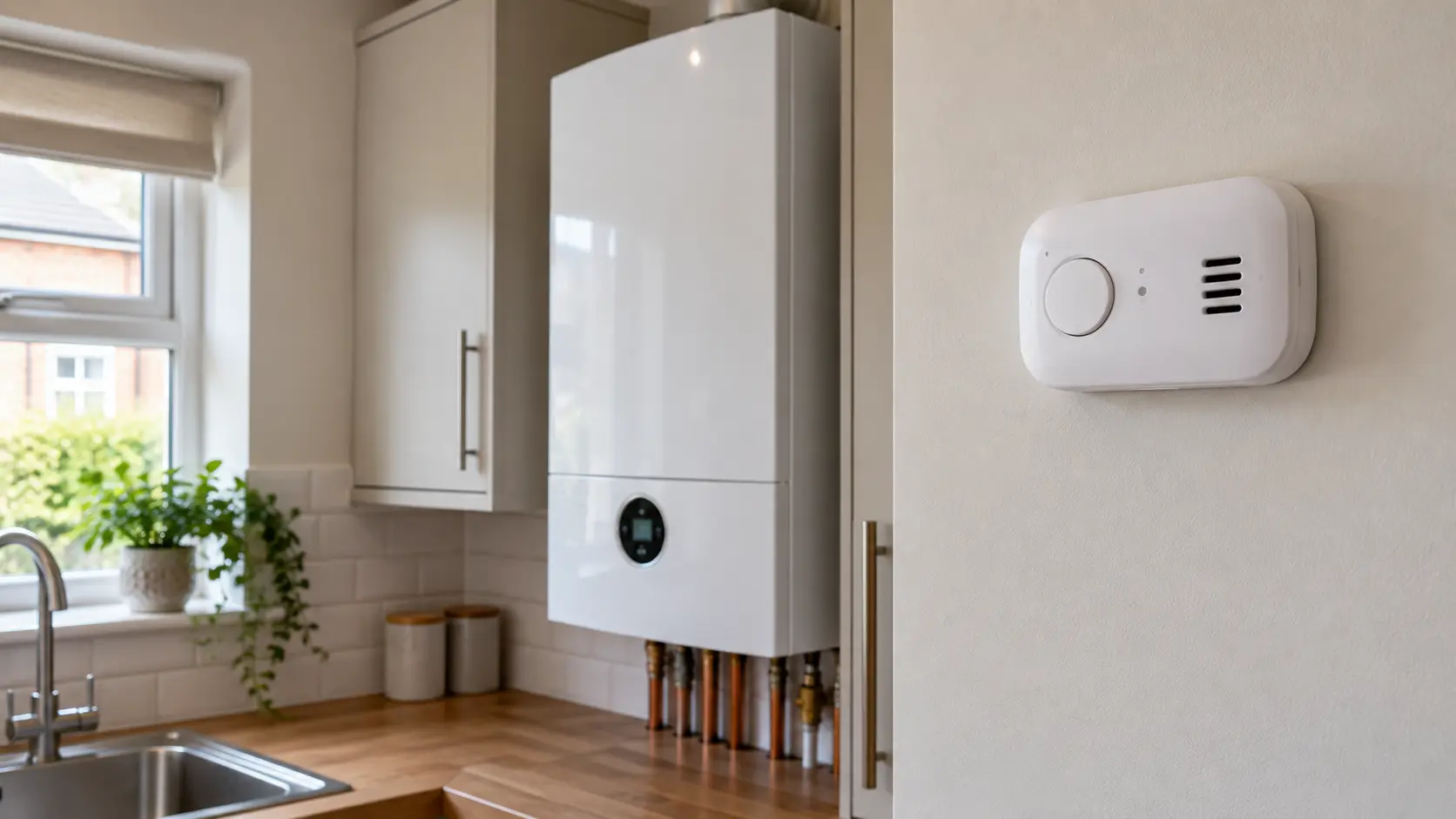
Where carbon monoxide comes from
In most homes, CO risk comes from appliances that burn fuel:
- Gas boilers, fires, cookers and water heaters
- Oil and LPG boilers
- Solid fuel stoves and open fires
- Blocked chimneys and flues
Problems usually start with a lack of servicing, a damaged flue, blocked ventilation or an appliance fitted incorrectly.
Symptoms of carbon monoxide poisoning
According to NHS guidance, common symptoms include:
- Tension-type headache
- Dizziness
- Feeling sick or being sick
- Tiredness and confusion
- Stomach pain
- Shortness of breath and difficulty breathing
Signs that point towards CO rather than illness:
- Symptoms improve when you’re away from home and return when you come back
- Other people in the house, or pets, are unwell at the same time
- Symptoms are worse when the heating or a particular appliance is on
If you suspect CO poisoning, get fresh air immediately and seek medical advice. Call 999 if symptoms are severe.
Appliance clues to look out for
Not every CO problem is obvious, but these signs mean an appliance needs checking:
- Yellow or orange flames on a gas appliance that normally burns blue
- Soot or brown staining on or around appliances or on the wall above a fire
- A pilot light that keeps going out
- Excess condensation on windows in the room with the appliance
- Smoke building up in a room with a fire or stove
Where to fit carbon monoxide alarms
Choose an alarm that meets British Standard EN 50291 and follow the manufacturer’s positioning instructions. As a general guide:
- Fit one in every room with a fuel-burning appliance
- Place it roughly 1 to 3 metres from the appliance
- Fit it at head height or on the ceiling, as the instructions specify
- Consider an alarm in bedrooms too
- Test it regularly and replace it before its expiry date
A CO alarm is a backstop, not a substitute for servicing. It tells you there’s a problem; servicing helps stop the problem happening.
What to do if your CO alarm goes off
- Open doors and windows to let fresh air in
- Turn off fuel-burning appliances if it’s safe to do so
- Get everyone, including pets, out of the house
- Call the National Gas Emergency Service on 0800 111 999 (for gas appliances)
- Seek medical help if anyone feels unwell
- Don’t use the appliance again until a Gas Safe registered engineer has checked it
How annual servicing reduces the risk
A boiler or gas appliance service includes checks on combustion, flue performance and ventilation, which are exactly the areas that cause CO problems. It’s one of the most practical reasons to book an annual boiler service rather than waiting for a fault.
For older gas appliances around Surrey, including fires and cookers that haven’t been checked in years, a gas safety check is a sensible first step. See our gas appliances page for more.
Frequently asked questions
Can a boiler leak carbon monoxide without a smell?
Yes. Carbon monoxide has no smell at all. The smell people sometimes notice from a faulty appliance comes from other combustion products, so the absence of a smell doesn’t mean there’s no CO.
Do I need a CO alarm if I have an electric cooker but a gas boiler?
Yes. Any room with a fuel-burning appliance, including a gas boiler, should have a CO alarm. It’s also sensible to fit one in bedrooms.
Are landlords required to fit carbon monoxide alarms?
In England, landlords must fit a CO alarm in any room used as living accommodation that has a fixed combustion appliance, excluding gas cookers, and repair or replace alarms when told they’re faulty.
How long do CO alarms last?
Most last between five and ten years depending on the model. Check the expiry date on the alarm and replace it when due.
Get your appliances checked
If you’re worried about carbon monoxide or your appliances haven’t been checked recently, give us a ring on 07557 373 042 or drop us a message and we’ll book you in for a safety check.