If you live in the UK, you already know how quickly the house feels cold when the heating stops doing its job. I’ve lost count of the number of calls that start with, “The boiler’s on, but the radiators are freezing.” That’s where proper central heating repair services come in, but before you panic, it helps to understand what might actually be going wrong.
Most heating problems aren’t dramatic boiler breakdowns. They’re small faults, air in the system or worn parts that build up over time. Catch them early and you can often avoid bigger, more expensive repairs.
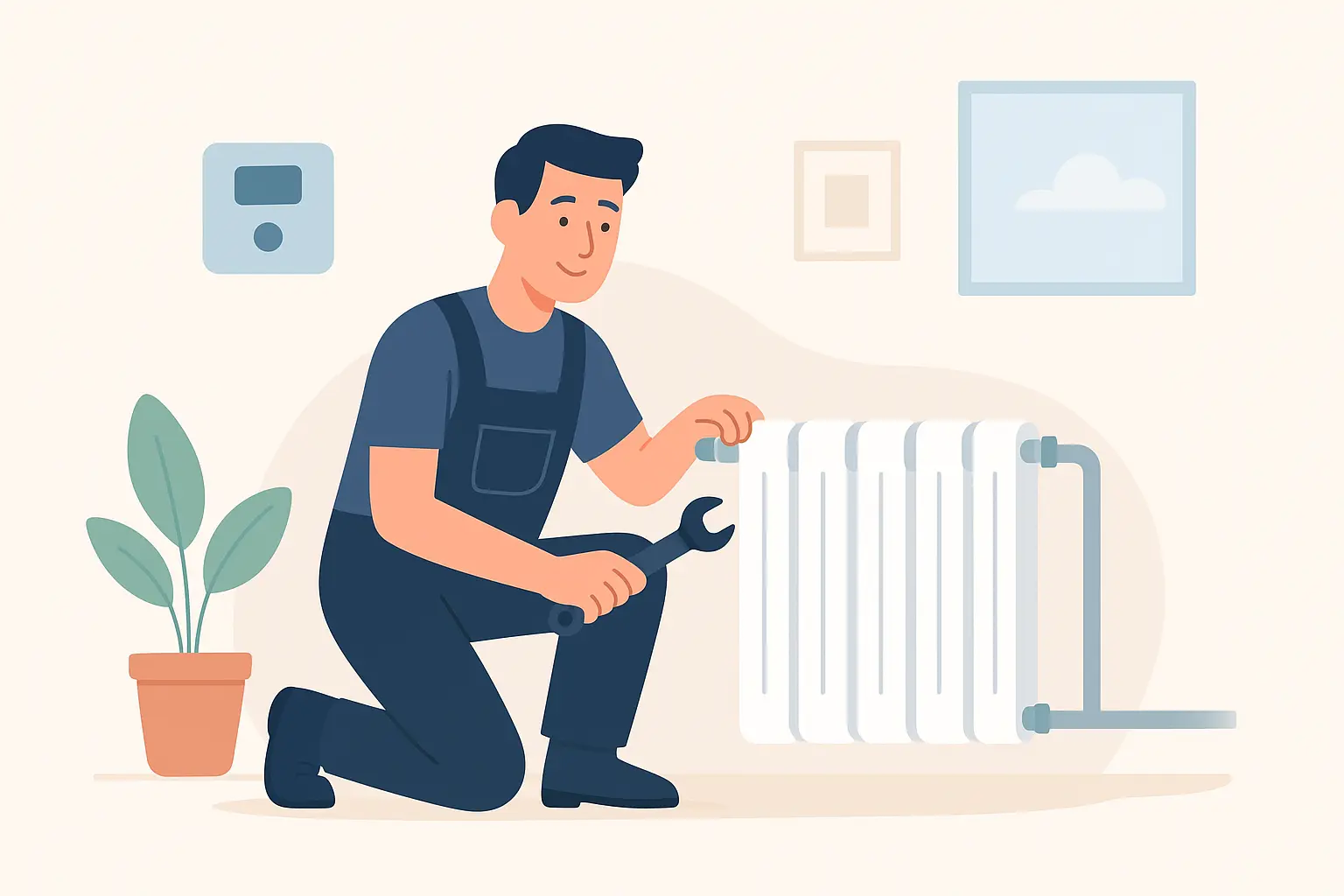
Top 10 central heating issues and how they are typically fixed
1. Radiators cold at the top
This is usually trapped air. If the top of the radiator is cold but the bottom is warm, it almost always needs bleeding. A radiator key and a cloth are all you need. Let the air out until water flows steadily, then check your boiler pressure afterwards.
2. Radiators cold at the bottom
If it’s the other way round, warm at the top and cold at the bottom, that points to sludge build-up. Over time, rust and debris settle in the system. The proper fix is a powerflush or chemical flush to clear it out. Simply bleeding won’t solve this one.
3. Boiler losing pressure
Boiler pressure dropping below 1 bar is a common complaint. It can be a small leak, recently bled radiators or a faulty pressure relief valve. Topping up via the filling loop might get you going again, but if it keeps happening, it needs investigating.
4. No heating but hot water works
This often points to a zone valve or motorised valve problem, especially in homes with separate hot water cylinders. I see this quite a bit in older properties around Farnham where systems have been upgraded in stages.
5. Thermostat not responding
Sometimes it’s as simple as flat batteries. Other times the thermostat has lost connection with the receiver or is poorly positioned in a draughty hallway. Smart controls can also drop out if the internet connection is unstable.
6. Strange banging or gurgling noises
Banging can mean kettling, often caused by limescale in the heat exchanger. Gurgling tends to be air or low water flow. Neither should be ignored. Noises are your system’s way of telling you it isn’t happy.
7. Pilot light keeps going out
On older boilers, a faulty thermocouple or debris in the pilot assembly is often to blame. Modern boilers will typically show a fault code instead of having a visible pilot light.
8. Some radiators not heating at all
This could be a stuck thermostatic radiator valve. If the pin inside sticks down, the radiator won’t heat. Gently tapping and easing it up can sometimes free it, but be careful not to force it.
9. Heating takes ages to warm up
If your system feels sluggish, it might be an ageing pump losing efficiency or general sludge restricting circulation. In a few homes I’ve worked on in Woking, upgrading the pump made a noticeable difference almost immediately.
10. Boiler keeps locking out
A lockout usually means the boiler has detected a fault for safety reasons. Low pressure, ignition issues or blocked condensate pipes are common causes. During freezing weather in places like Farnborough, a frozen condensate pipe is a frequent culprit.
When to call a professional vs DIY checks you can try safely
There are a few sensible checks most homeowners can do before picking up the phone.
- Check the thermostat settings and batteries
- Make sure the boiler pressure is between 1 and 1.5 bar
- Bleed radiators if they’re cold at the top
- Check that isolation valves are open
- Reset the boiler once if it has locked out
Anything involving removing the boiler casing, gas components or electrics should be left to a Gas Safe registered engineer. I’ve been to jobs where a well-meaning landlord has tried to fix a leak themselves and ended up with a bigger repair.
If you live locally and your system is older, it’s also worth considering whether repairs are becoming frequent. In some cases a modern, efficient boiler makes more sense long term. You can see what’s involved in installations in Woking, Farnham or Farnborough if you’re weighing up your options.
For general upkeep, having the system serviced annually makes a big difference. A proper service checks safety, cleans key components and often spots worn parts before they fail in the middle of January. There’s more detail on what’s included in professional maintenance on expert central heating services.
Prevention tips and next steps
Most major breakdowns start as minor issues. A small drop in pressure, a slightly noisy pump or a radiator that never quite gets hot enough. If you deal with those early, you reduce the chances of waking up to a freezing house.
Simple steps help:
- Bleed radiators once a year
- Keep an eye on boiler pressure
- Book an annual service
- Don’t ignore unusual noises
- Lag condensate pipes before winter
As someone who’s worked in plenty of homes across Surrey and Hampshire, I can say most customers just want honest advice and a reliable fix. That’s exactly how we approach things at DS Gas Services. If your heating isn’t working as it should or you’d just like some straightforward guidance, you can book your repair today and get it sorted before it turns into something bigger.