
Gas fires should be serviced once a year by a Gas Safe registered engineer, just like a boiler, and most manufacturers recommend the same. Gas hobs and cookers don’t usually need a full annual service, but they should be checked if anything changes: flames burning yellow or orange, burners that won’t light properly, a smell of gas, or scorch marks around the appliance.
A yearly check of every gas appliance is the simplest rule for homeowners, and it’s a legal requirement for landlords. Our gas appliances page explains what we work on.
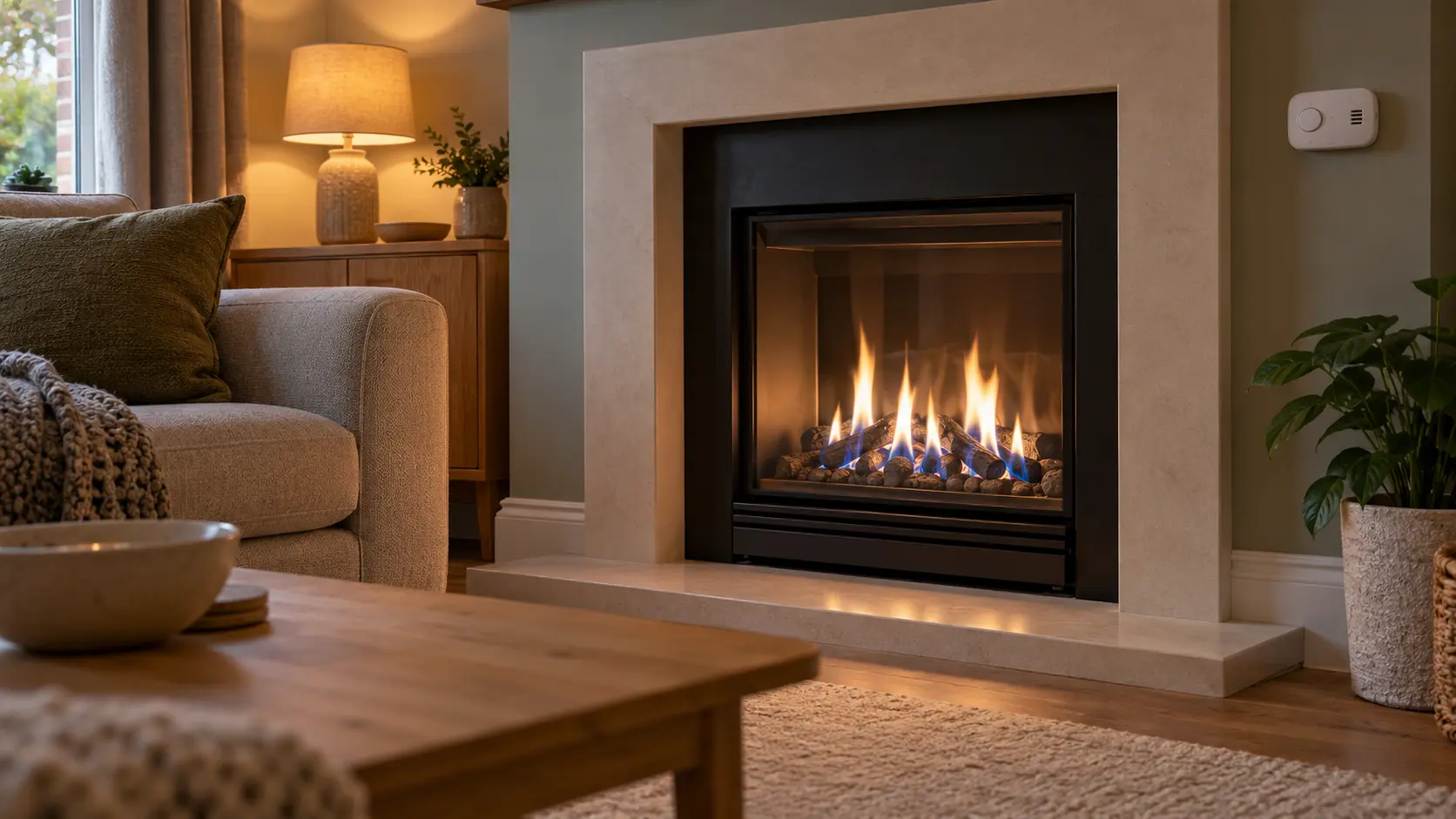
Why gas fires need an annual check
A gas fire burns gas in an open or semi-open space and relies on a flue or chimney to take waste gases away. Over time:
- Soot and debris can build up in the flue or chimney
- Ceramic coals, fuel beds and radiants can crack or shift
- Burners and injectors can partially block
- Safety devices such as the flame failure device and oxygen depletion sensor can become unreliable
Any of these can affect how cleanly the fire burns and how well waste gases clear. That’s why annual servicing matters more for gas fires than almost any other appliance in the home.
Do gas hobs and cookers need servicing?
Hobs and cookers are simpler, and many are used for years without a formal service. They still need checking if:
- Flames are yellow, orange or lazy rather than crisp and blue
- A burner won’t light, keeps going out or lights with a bang
- There’s a smell of gas when it’s off
- The ignition clicks but doesn’t catch
- Soot marks appear on pans or around the burners
- The oven door seal is damaged
A gas safety check covers all gas appliances in one visit, so it’s easy to have the hob or cooker checked when the boiler is serviced.
Warning signs of a faulty gas appliance
Stop using an appliance and get it checked if you notice:
- Yellow or orange flames instead of blue (unless it’s a decorative living-flame fire designed to burn yellow; check the manufacturer’s guidance)
- Soot or staining on the wall above a fire or around the appliance
- Condensation building up on windows in the room
- A pilot light that keeps going out
- Headaches, dizziness or nausea that ease when you leave the room, which can be a sign of carbon monoxide
Every room with a gas fire should have an audible carbon monoxide alarm. Our guide on gas safety explains more about staying safe with gas at home.
What an engineer checks
A gas fire service or appliance safety check typically includes:
- Checking the appliance is correctly installed and secure
- Testing the gas pressure and burner operation
- Cleaning burners, injectors and the fuel bed on fires
- Checking the flue or chimney is clear and drawing properly (a flue flow or spillage test)
- Checking ventilation is adequate for the appliance
- Testing safety devices
- Checking pipework and connections are gas tight
Simple habits for safer gas appliances
- Keep the area around gas fires clear of furniture, curtains and clutter
- Don’t block air vents or bricks installed for ventilation
- Never use a gas cooker or hob to heat a room
- Keep carbon monoxide alarms tested and replace them when they expire
- Book servicing through a Gas Safe registered engineer and ask to see their Gas Safe ID card
If you smell gas, turn off the supply at the meter if it’s safe, open doors and windows, don’t use electrical switches or naked flames, and call the National Gas Emergency Service on 0800 111 999.
Older gas fires in Surrey homes
Some older properties around Farnham, Guildford and Woking still have gas fires installed decades ago, sometimes in front of a back boiler. Older fires can be harder to get parts for, and some models are no longer supported. If yours is showing its age or failing checks, it may be time to think about replacement. A modern boiler can also make removing an old back boiler and fire a sensible upgrade.
Frequently asked questions
Is a gas fire service the same as a gas safety check?
A gas safety check confirms the appliance is safe. A service goes further, cleaning components and checking performance in more detail. For gas fires, a service is recommended yearly.
Can I use my gas fire if it hasn’t been serviced for a few years?
It’s best to have it checked before using it again, particularly at the start of winter. Flues and chimneys can become blocked over time, which affects how safely the fire burns.
Do electric hobs need gas safety checks?
No. Gas safety checks only apply to gas appliances and pipework. If your cooker is dual fuel, the gas hob or oven still needs checking.
Do landlords need to check gas hobs?
Yes. Landlords must have every gas appliance they provide checked every 12 months, including hobs and cookers.
Get your gas appliances checked
If your gas fire or hob hasn’t been checked for a while, or you’ve noticed any warning signs, give us a call on 07557 373 042 or send us a message and we’ll arrange a visit.