
If you’re looking to upgrade your home’s hot water system, you’ve probably come across the term unvented cylinder. They’re increasingly popular across the UK, especially in modern homes and renovations – but what exactly are they, and how do they work?
In this guide, we’ll break it down in simple terms while also giving you the technical detail needed to understand why unvented cylinders are such an effective solution for delivering high-pressure hot water.
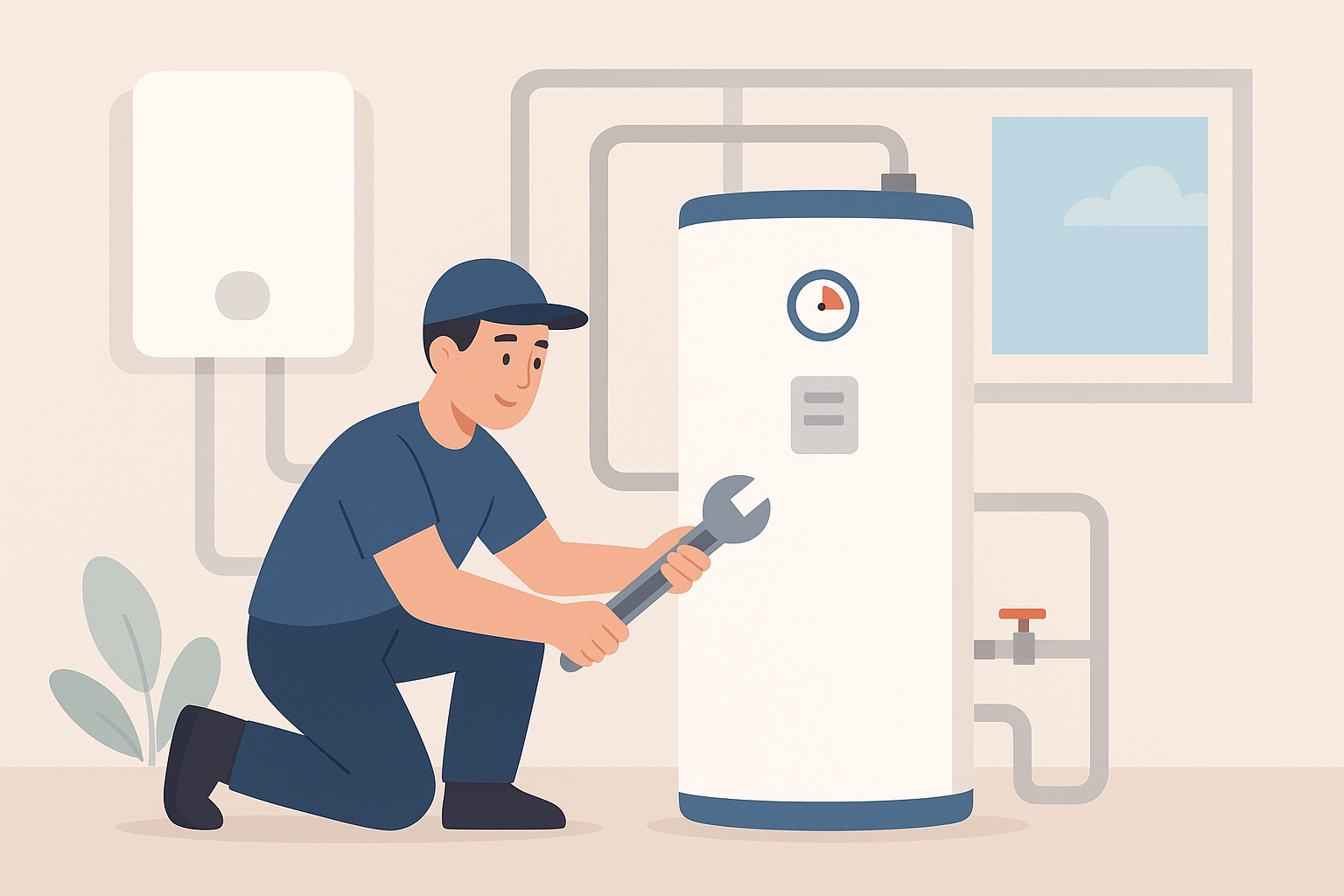
What Is an Unvented Cylinder?
Unlike traditional vented systems, which depend on gravity to create pressure, unvented cylinders use the natural pressure of the mains supply. This allows them to deliver strong, consistent hot water flow throughout the property.
Brands like Megaflo have made these systems widely recognised in the UK, but the principle is the same across all unvented cylinders.
How Does an Unvented Cylinder Work?
At its core, an unvented cylinder stores and heats water under pressure. Cold mains water enters the cylinder, is heated, and then stored until it’s needed.
When you turn on a hot tap or shower, the pressurised hot water is pushed out directly—without needing pumps or gravity-fed tanks.
Here’s how the process works step by step:
Mains Water Supply
Cold water enters the cylinder directly from the mains supply. Because this water is already pressurised, it forms the basis of the system’s performance.
Heating the Water
The water inside the cylinder is heated either by:
- A gas boiler (via a coil/heat exchanger)
- Electric immersion heaters
Most UK homes use a system boiler connected to the cylinder, which heats the stored water efficiently.
Storage Under Pressure
Once heated, the water is stored inside the sealed cylinder. Because the system is unvented, it maintains pressure within the tank.
Hot Water Delivery
When a tap is opened, the stored hot water is pushed out at mains pressure. This provides strong flow rates—even when multiple outlets are used at the same time.
Why Pressure Matters
One of the biggest advantages of an unvented cylinder is the consistent high water pressure.
In traditional systems, pressure depends on the height of a loft tank. This often leads to weak showers and uneven flow. With an unvented system, pressure is equal across the entire property.
This means:
- Powerful showers without pumps
- Faster filling baths
- Better performance in larger homes
For engineers, this also simplifies system design—fewer variables and no reliance on gravity-fed distribution.
Key Components of an Unvented Cylinder
Although the concept is simple, unvented systems rely on several safety and control components to operate correctly.
Expansion Vessel
As water heats, it expands. The expansion vessel absorbs this increase in volume, preventing excessive pressure buildup.
Temperature & Pressure Relief Valve (T&P Valve)
This is a critical safety device. If temperature or pressure rises too high, the valve releases water to prevent system failure.
Pressure Reducing Valve
Mains pressure can vary, so this valve ensures the system operates within safe limits.
Thermostats and Controls
These regulate water temperature and prevent overheating.
From an engineering perspective, these components are what make unvented systems safe and compliant with UK regulations.
Are Unvented Cylinders Safe?
Yes – when installed and maintained correctly.
Because they store water under pressure, unvented cylinders must meet strict safety standards. In the UK, installation must be carried out by a G3-qualified engineer, ensuring compliance with building regulations.
Modern systems are extremely safe thanks to multiple built-in safety features, including backup thermostats and discharge systems.
Benefits of Unvented Cylinders
Unvented cylinders offer several clear advantages over traditional systems.
First, they provide excellent water pressure, which significantly improves showers and overall usability. For homeowners, this is often the biggest selling point.
Second, they eliminate the need for a cold water storage tank in the loft. This frees up space and reduces the risk of contamination or freezing.
They’re also ideal for homes with multiple bathrooms. Because the system operates at mains pressure, it can supply several outlets simultaneously without a major drop in performance.
Finally, modern cylinders are highly insulated, meaning they retain heat efficiently and reduce energy waste.
Are There Any Downsides?
While unvented cylinders are highly effective, they’re not suitable for every situation.
They rely on good mains water pressure. If your incoming supply is weak, performance may be limited.
Installation costs can also be higher than simpler systems, particularly if upgrades to pipework or pressure controls are required.
Additionally, annual servicing is recommended to ensure safety components continue to function correctly.
Is an Unvented Cylinder Right for Your Home?
Unvented cylinders are particularly well-suited to:
- Homes with multiple bathrooms
- Properties without loft space for tanks
- Households that want strong, consistent water pressure
- Renovations and modern heating system upgrades
They’re commonly installed across towns like Guildford and Woking, where demand for high-performance hot water systems is increasing.
However, the best way to determine suitability is through a professional assessment of your water pressure, usage, and system design.
Final Thoughts
An unvented cylinder is a powerful, efficient way to deliver high-pressure hot water throughout your home. By using mains pressure and storing heated water in a sealed system, it offers a level of performance that traditional systems struggle to match.
For homeowners, the benefits are clear: stronger showers, better reliability, and improved overall comfort. For engineers, it’s a robust and efficient solution that integrates well with modern heating systems.
If you’re considering upgrading your hot water system, an unvented cylinder is well worth exploring – especially if performance and reliability are top priorities.
Contact us today for more information about our system boiler and unvented hot water cylinder installation.