If you have ever had a heating engineer kneeling on your kitchen floor explaining why your old system is costing a fortune to run, you will know that not all water heaters are created equal. The type of system you choose has a direct impact on your energy bills, your comfort and your long-term home heating efficiency.
With energy prices still higher than most of us would like, homeowners across Surrey and Hampshire are asking the same question: what is the most efficient water heater for my home? The honest answer is that it depends on the property, how much hot water you use and what fuel source you have available.
Below, we break down the main options in plain English and explain where each one works best.
What makes a water heater efficient?
Before comparing systems, it helps to understand what efficiency actually means. In simple terms, it is about how much usable heat you get compared to the energy you put in.
Key factors include:
- Energy rating: Modern boilers and water heaters carry ErP ratings. An A-rated unit converts more fuel into usable heat.
- Fuel type: Gas, electricity and renewable energy all have different running costs in the UK.
- Insulation: A well-insulated hot water cylinder or tank reduces heat loss.
- Smart controls: Timers, thermostats and smart systems prevent heating water you do not need.
- Technology type: For example, a condensing boiler captures and reuses heat that older models simply waste.
True efficiency is not just about the appliance itself. It is about how well the whole system matches your household’s needs.
Combi boilers – are they the most efficient option?
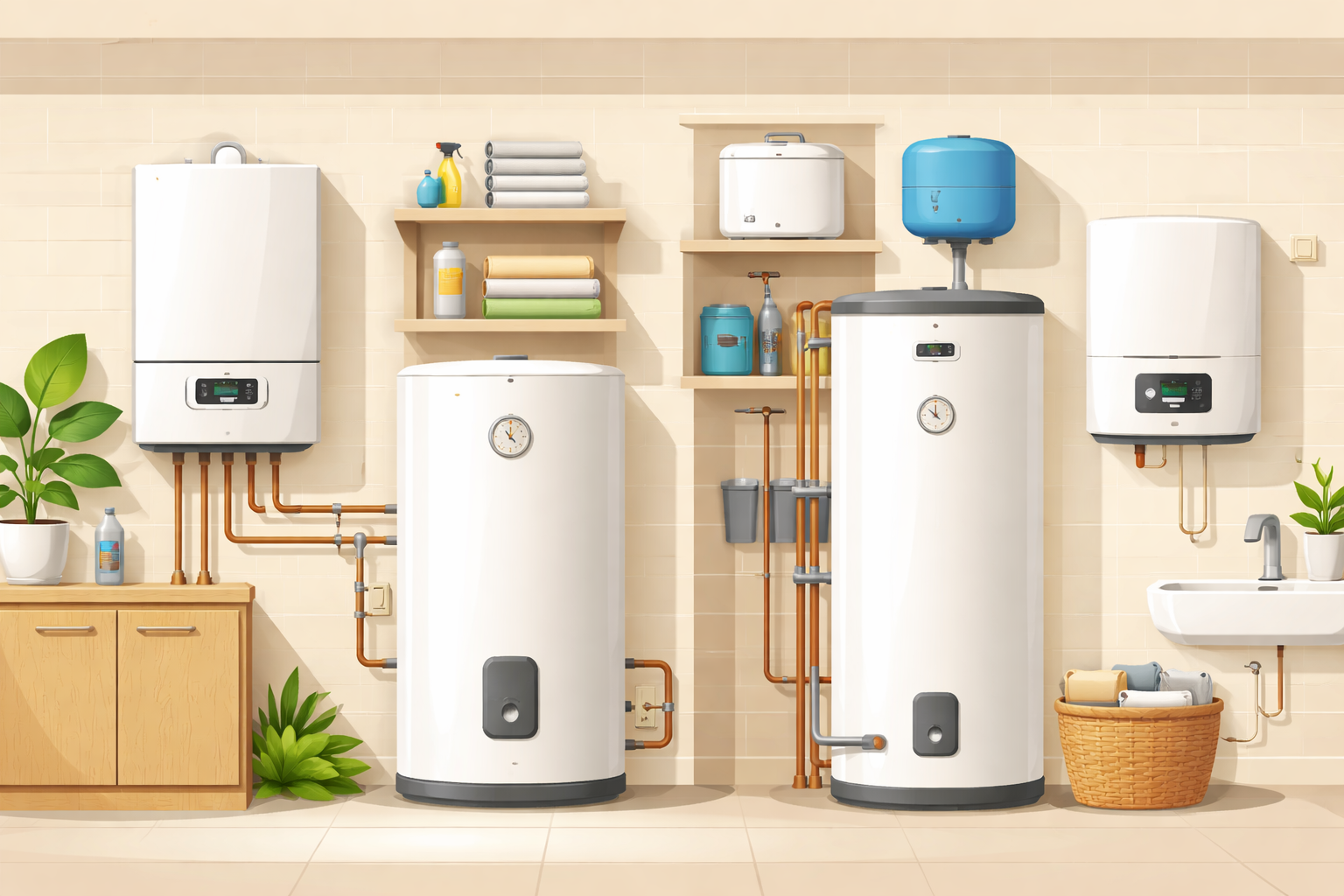
The combi boiler is one of the most common systems we see in local homes. It provides hot water on demand without a separate cylinder. That means no stored water cooling down in a cupboard.
Modern combis are usually condensing boilers, which makes them highly efficient. They reuse exhaust gases to extract additional heat, pushing efficiency levels above 90 percent in many cases.
For small to medium-sized homes with one bathroom, a combi boiler can be an energy efficient water heater. You only heat water when you turn on the tap. There is less standing heat loss compared to a stored system.
The catch? If you have two showers running at once, pressure and temperature can drop. Larger households often find a combi struggles with high demand.
System boilers with hot water cylinders
A system boiler works with a separate hot water cylinder. The water is stored and ready to use, which makes it ideal for homes with multiple bathrooms.
Older cylinders used to be notorious for losing heat. Modern insulated hot water cylinders are much better. Many include factory-fitted foam insulation that keeps water hot for long periods.
Paired with a high-efficiency condensing boiler and good controls, this type of system can deliver strong home heating efficiency and cope easily with busy households.
We often recommend this setup for four-bedroom houses where morning demand is high. It costs a little more to install than a combi, but it can be more practical.
Electric water heaters and when they suit a property
An electric water heater is simple and compact. There is no flue and no need for a gas supply. That makes them popular in flats, annexes and some new builds.
In terms of raw conversion, electric heaters are close to 100 percent efficient because almost all the electricity is converted into heat. However, electricity is usually more expensive per unit than gas in the UK.
For small properties with low hot water demand, the higher unit cost can be manageable. For larger homes, running costs can quickly outweigh the benefits.
We sometimes see electric systems installed where gas is not available. In those cases, careful control settings and good insulation are essential.
Heat pump water heaters – high efficiency explained
A heat pump water heater works differently. It extracts heat from the surrounding air and transfers it into your hot water. Instead of generating heat directly, it moves it.
This is why the efficiency can appear much higher than traditional systems. For every unit of electricity used, a heat pump water heater can deliver several units of heat. This makes it one of the most efficient water heater options available.
They are especially attractive to homeowners looking to reduce carbon emissions. However, installation space, airflow requirements and upfront cost all need to be considered.
In older properties with limited space or poor insulation, additional upgrades may be needed to get the best performance from a heat pump.
Gas vs electric: which is cheaper to run in the UK?
This is one of the most common questions we hear on site.
When comparing gas water heater efficiency with electric models, gas often works out cheaper to run due to lower unit prices. A modern gas condensing boiler paired with smart controls usually offers an excellent balance of efficiency and running cost.
Electric systems can be more efficient at the point of use, but because electricity costs more per kilowatt hour, overall bills are often higher unless you are pairing the system with solar panels or off-peak tariffs.
That said, homes without a mains gas connection may find electric or heat pump systems the more practical route.
Factors to consider before choosing
There is no single answer that suits every property. When advising homeowners, we usually look at:
- Property size and number of bathrooms
- Current fuel supply
- Hot water usage patterns
- Space for a hot water cylinder or external unit
- Budget for installation and long-term running costs
- Plans for future upgrades such as insulation improvements
A small terrace in town will have very different needs to a detached family home. We have seen customers overspend on systems that are too large, and others under-spec their setup then wonder why it struggles in winter.
Professional advice and installation
Even the most efficient water heater will not perform well if it is poorly sized or badly installed. Pipework layout, system balancing and control setup all play a part.
A qualified heating engineer will assess your existing system, check gas supply where relevant and recommend options that genuinely suit your home. Sometimes that means keeping things simple rather than jumping straight to the newest technology.
Good advice upfront can prevent years of higher bills and frustration.
Choosing the right system for home
The most efficient water heater is the one that matches your property and lifestyle. For some homes, that will be a modern combi boiler. For others, a system boiler with a well-insulated hot water cylinder or even a heat pump water heater will make more sense.
If you live in Camberley, Farnborough Farnham, Guildford, Mytchett, Woking and the surroudning areas in Surrey and are weighing up your options, a local perspective makes a difference. Housing stock varies widely across these areas, from 1970s estates to older character properties, and each brings its own challenges.
The team at DS Gas regularly advise homeowners on improving gas water heater efficiency and overall home heating efficiency with practical, realistic recommendations. Contact DS Gas for expert advice and a free quote on the most efficient water heater for your home.