You top up the boiler pressure, everything seems fine, and a few days later the needle has dropped again. It’s one of the most common things homeowners ask us about as the heating comes on for winter. The short answer is that a boiler losing pressure is usually down to water escaping somewhere, through a leak, a faulty pressure relief valve or a recently bled radiator, or a problem with the expansion vessel. A one-off drop is easy to fix. If it keeps happening, our boiler service and repairs team can find the cause for homes across Surrey.
What should your boiler pressure be?
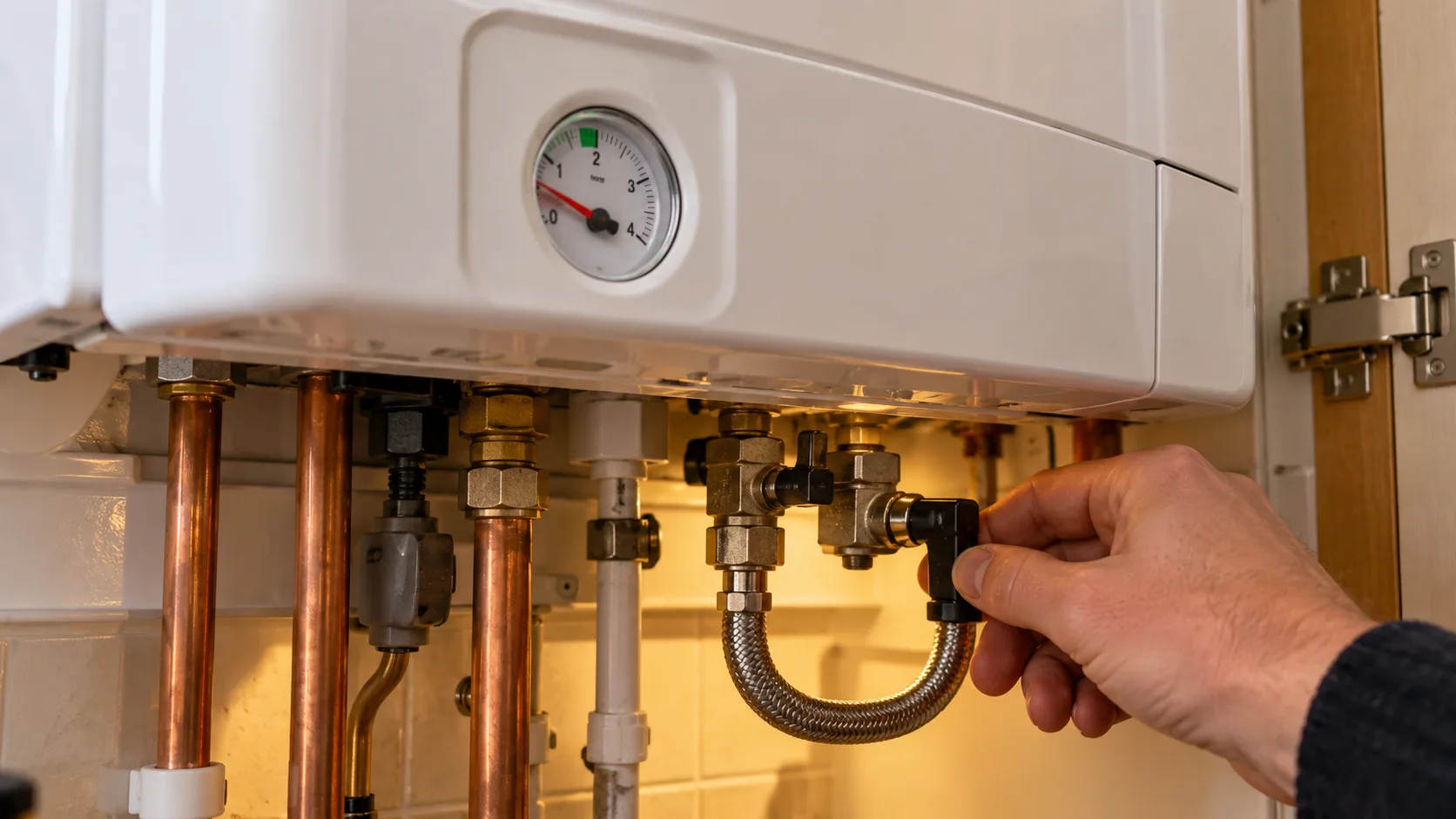
Most combi and system boilers should read about 1 to 1.5 bar on the pressure gauge when the heating is cold. It rises a little when the heating is running, often to around 2 bar. Check your boiler manual, as the exact figures vary between makes.
If the pressure drops below about 1 bar, many boilers will lock out and stop working, leaving you without heating or hot water.
Common reasons a boiler loses pressure
You’ve recently bled the radiators
Bleeding radiators lets out air and a little water, so a small drop in pressure afterwards is normal. Top it up and it should stay put.
A leak in the system
Water can escape from radiator valves, joints, pipework under floors or the boiler itself. Even a very slow drip will lower the pressure over a few days. Check around radiator valves, visible pipes and under the boiler for damp patches, stains or rust marks.
The pressure relief valve
This is a safety valve that lets water out if the pressure gets too high. It usually discharges through a small copper pipe that runs to the outside wall. If that pipe is dripping, either the pressure has been too high at some point, often from overfilling, or the valve itself is letting by.
The expansion vessel
The expansion vessel gives water room to expand as it heats up. If it loses its air charge, the pressure swings up when the heating is on and drops when it cools. That can push water out of the relief valve and leave the system low. Recharging or replacing the vessel is a job for an engineer.
Safe checks you can make yourself
- Look at the gauge with the heating off and cold, and note the reading
- Check for drips around radiators, valves and the boiler
- Look outside for water dripping from the small copper pipe on the wall
- Top up the pressure using the filling loop, following your boiler manual, then close the valves fully
Don’t remove the boiler casing or try to adjust anything inside. If you smell gas at any point, turn off the supply at the meter if it’s safe, open windows and call the National Gas Emergency Service on 0800 111 999.
When to call an engineer
Book a visit if:
- You need to top up more than once every few weeks
- Water is dripping from the pressure relief pipe outside
- The pressure rises sharply when the heating comes on
- You can see a leak but can’t tell where it’s coming from
- The boiler keeps locking out even after topping up
A Gas Safe registered engineer can pressure-test the system, check and recharge the expansion vessel, and replace a faulty relief valve. If the water is escaping from pipework rather than the boiler, our plumbing team can track down and repair the leak.
Boiler pressure problems in Surrey homes
Many homes around Woking, Guildford, Camberley and Farnham have heating systems that have been altered over the years, with newer boilers connected to older radiators and pipework. Old joints and valves are common places for slow leaks to start, especially when the heating comes back on in autumn and the pipes expand and contract again.
Frequently asked questions
Is it dangerous if my boiler pressure is low?
Low pressure isn’t dangerous in itself. The boiler will usually lock out to protect itself, which leaves you without heating or hot water. The bigger concern is why it’s dropping, as a leak can damage floors, ceilings and electrics if it’s left. Get it checked if it keeps happening.
How often should I need to top up my boiler pressure?
Ideally, hardly ever. A sealed system shouldn’t lose water. Topping up once after bleeding radiators is normal, but if you’re doing it every week or two, something is escaping and it’s worth having an engineer find the cause before it gets worse.
Can high pressure cause my boiler to lose pressure?
Yes. If the system is overfilled or the expansion vessel isn’t working, pressure can climb too high when the heating runs. The relief valve then lets water out, and once the system cools, the pressure ends up too low. It’s a common cycle that an engineer can fix.
Boiler pressure keeps dropping?
If you’re topping up more often than you should, give us a call on 07557 373 042 or drop us a message and we’ll come out and find where the pressure is going.